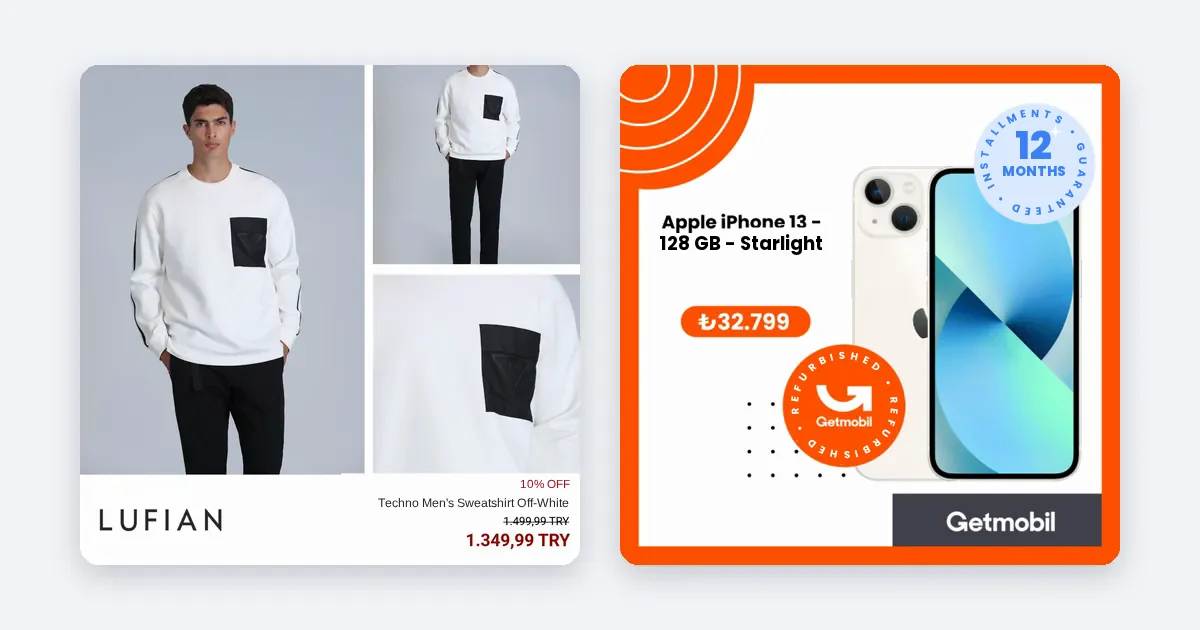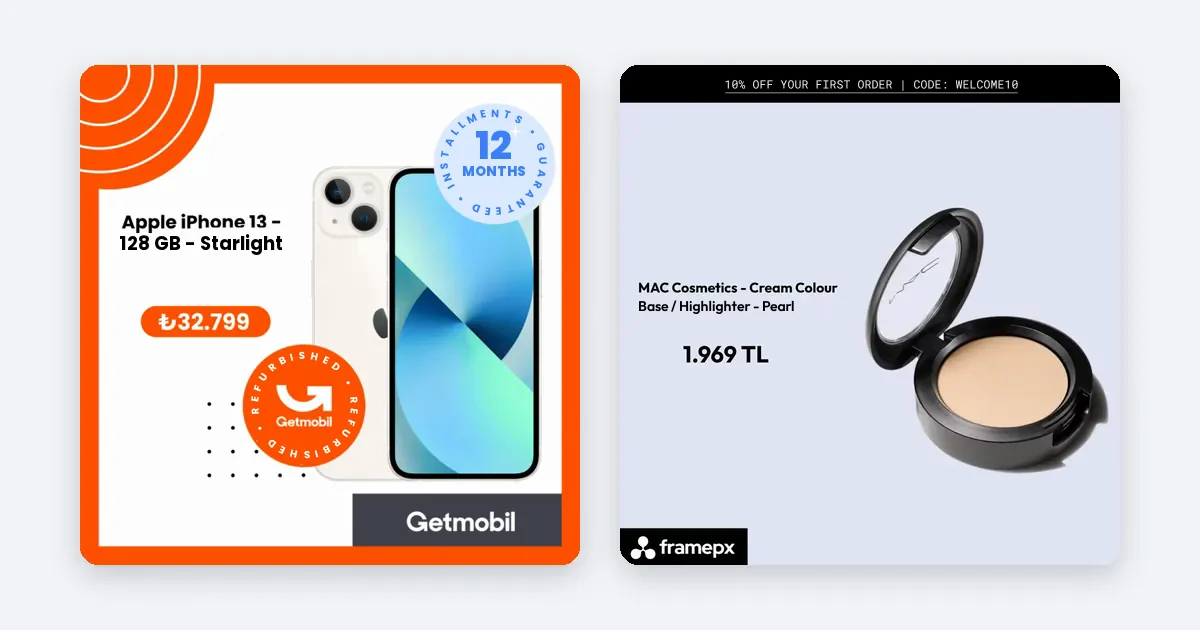
Meta picks the product it predicts a person is most likely to act on, given the goal you set. You cannot see the exact model, but you control what it works with: the optimization goal, the quality of your feed, the creative and the budget.
That is useful, because the inputs are where results are made. A clean feed with clear images and a clear goal gives the system better options than a messy one.
What Meta decides, and what you decide
Meta's delivery runs an auction each time there is a place to show an ad. It does not publish how it ranks one product against another, so be careful with any article that claims to know the exact formula, this one included. What you can know is the list of things you hand to it.
| You decide | Meta decides |
|---|---|
| The campaign goal, such as purchases | Which person sees an ad at a given moment |
| The products in your feed and their data | Which of those products is shown to that person |
| The images, titles and prices | Which version of the creative appears |
| The budget and schedule | How spend is paced across the day |
Step 1: Choose a goal that matches the sale
Pick the optimization event closest to the money. For a shop, that is usually purchase. If you optimize for clicks, the system looks for people who click, not people who buy.
If your account has too few purchases to learn from, a step earlier in the funnel such as add to cart can help for a while. Move back to purchase when volume allows.
Step 2: Give it a clean feed
The feed is the pool of products the system chooses from. Check these in Commerce Manager:
- Fix every error and warning in the feed's diagnostics page.
- Keep price and availability exactly the same as your site.
- Make sure every product has a clear main image and a short, specific title.
- Remove products you do not want to promote from the product set the campaign uses.
A product that is missing data or has a weak image is unlikely to be a good choice for any person, so it gets little delivery. That is the system working as designed.
Step 3: Offer more than one creative
Meta can only choose among what you provide. If you give one image in one size, it has nothing to adapt to the place. Provide the sizes the placements use: 1:1 for feeds, 4:5 for tall feed posts, 9:16 for Stories and Reels. Then compare results in Meta Ads Manager per placement.
Step 4: Keep the budget stable while it learns
When an ad set starts, Meta goes through a learning phase. Meta's own help page, About the learning phase, describes it. Independent Meta advertising specialist Jon Loomer notes that advertisers commonly treat about 50 optimization events in a seven-day window as the benchmark for leaving it, and that Meta once set this as a hard rule (Jon Loomer). In practice:
- Avoid large changes to targeting, creative or budget in the first days.
- Increase budget gradually, not in one jump.
- Judge results after the system has had time and volume, not after one day.
Step 5: Segment so the system has a clear choice
If every product sits in one ad set, the system may spend on whatever looks cheap to win. Split by custom label, for example fast sellers and slow sellers, so each ad set has a clear job. You then read results per group, not per campaign.
Where Framepx fits
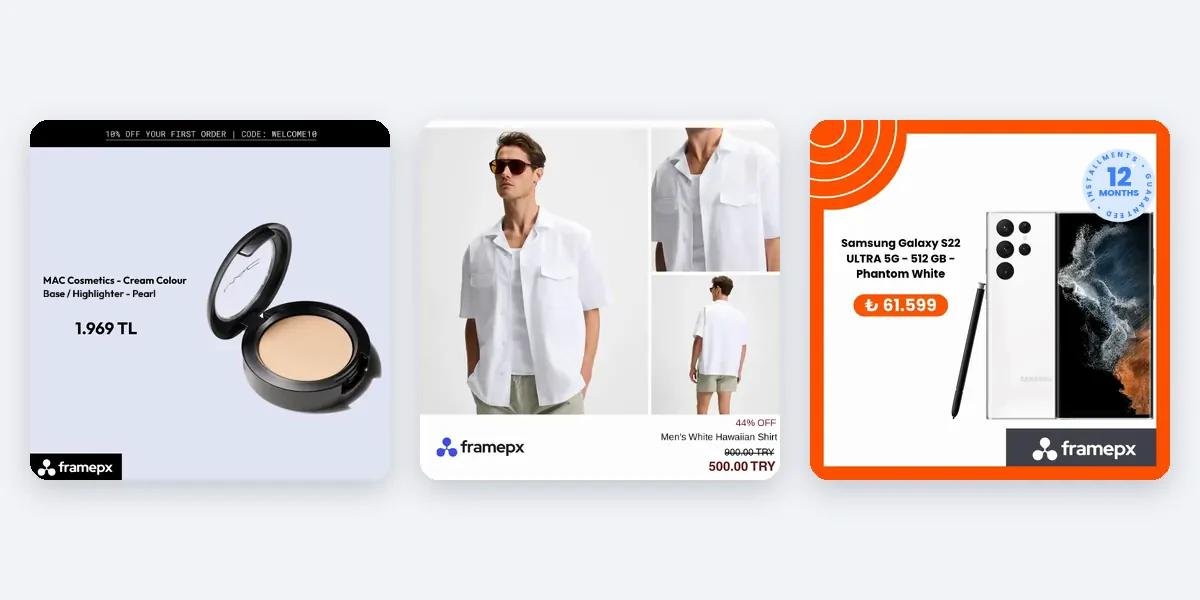
Framepx is an AI system for product ads, offered as AI as a service. Its AI engine turns every product in your feed into your brand's own ad in 1:1, 4:5 and 9:16 and keeps each ad in step with the product's price and stock.
Its decision engine adds a layer in front of the channel. It picks which product shows where from price, stock, the channels' results and GA4. Meta's own delivery then works inside the set of products and ads you give it. The channels read the ads through a feed link today.
This does not replace Meta's delivery or claim to control it.
Common questions
Can I tell Meta which product to show to which person?
Not at the level of one person. You decide the goal, the product set, the creative and the budget. Meta decides the match inside that.
Why does one product get most of the spend?
The system tends to favor items where it predicts a good result. If the feed or image of another product is weaker, it gets less. Check data and creative for the ignored products first.
Does a better image change delivery?
Delivery responds to how people react. An image that people stop on and click gives the system better signals than one they scroll past. It is not a guarantee, but it is the input you control most.
How long should I wait before judging a new ad set?
Wait until it has left the learning phase or gathered enough events to compare fairly. A single day rarely says enough.
To give Meta a better set of ads to choose from, schedule a demo.
Written by
Framepx team, Editorial team
The Framepx editorial team writes for brands, marketers and agencies about ad platforms, measurement, creative and product feeds.